You Don T Know How It Feels Chords
Music plays a lot of different roles in our lives.
Only at the finish of the twenty-four hour period music is about emotion. The best way to connect with your listeners on a human level is through honest, emotionally rich work.
Conveying the right emotions when yous write songs isn't like shooting fish in a barrel. Just some chord progressions tin evoke powerful feelings correct away.
Today nosotros're sharing five distinct moods y'all can create in your songs using emotional chord progressions.
To get the well-nigh out of this commodity, yous'll need to take some basic music theory knowledge like how to build chords and Roman Numeral Assay. Take a 2nd to brush up if you need a refresher.
Epic chord progressions
From the hero's journeying to music that reflects the power of nature, epic chord progressions turn your songs' emotional intensity up to eleven.
Our first progression is the agile ingredient in a huge number of hit tracks—for a good reason. Each chord adds a new layer to its satisfying emotional arc:
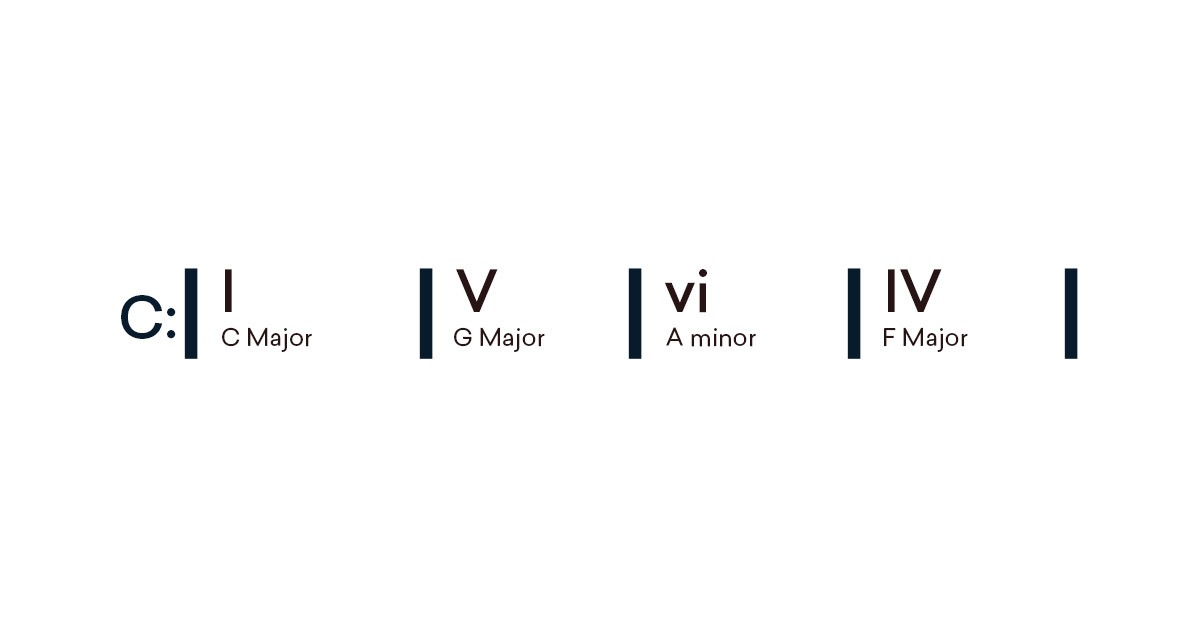
This progression can be heard across many musical genres, from John Denver'southward Take Me Home Country Roads to The Cure's A Letter To Elise:
Simply epicness tin can occur wherever there'south heightened emotion. One progression that never fails to tug at the heartstrings is the unique bike of chords constitute in Pachelbel's canon:
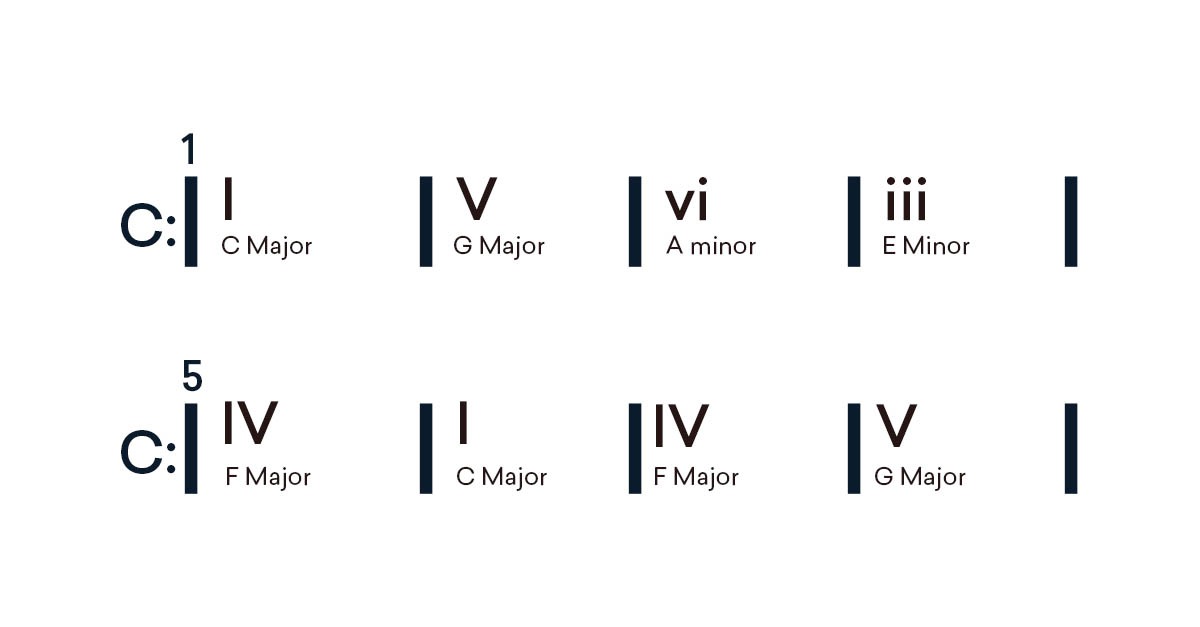
Pop artists from Vitamin C to Oasis and Belle & Sebastien take brought this stately notwithstanding epic emotional chord progression into modernistic music:
Pitiful chord progressions
Sadness is an unavoidable part of life. Just information technology's too the ground for lots of neat music.
What sounds sad changes from person to person, but there'south a few common chord progressions that signal sadness right away.
Some chord progressions accept potent associations with a specific era.
Some chord progressions have strong associations with a specific era. This one is sometimes chosen the "50s progression:"
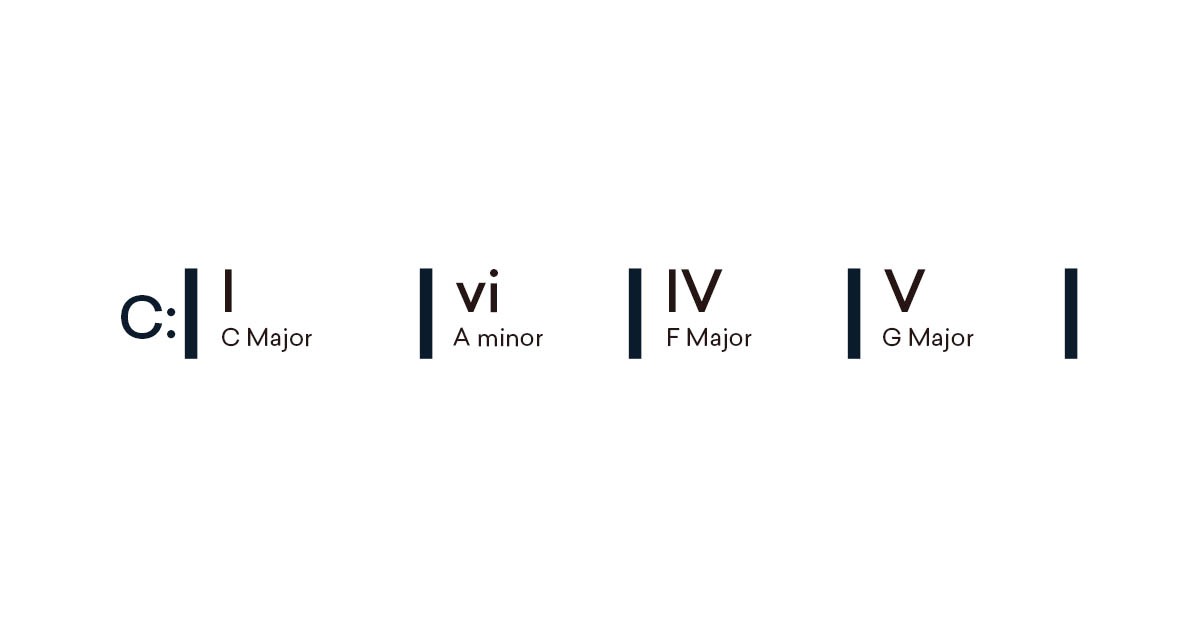
Information technology's peculiarly common in doo-wop music and classic love songs from the era of pop crooners:
Endeavor the 50s progression if y'all want to evoke some classy sadness and nostalgia.
Here'south another one that'south certain to requite you the blues:
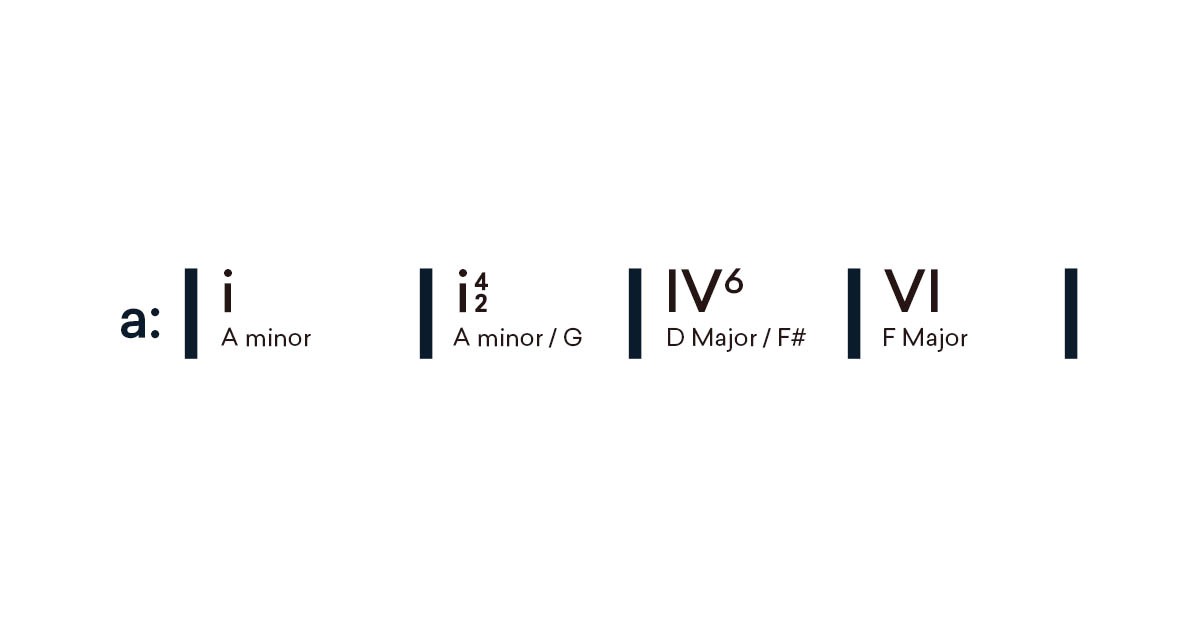
Don't let the inverted chords or slash chords in this progression fool you—it's based on a unproblematic descending bass line.
Minor chords and downward motion combine with a ho-hum tempo to create an atmosphere of loss and despair:
A variation of this descending minor progression can be heard on Led Zeppelin's rendition of Babe, I'm Gonna Get out You
Cool chord progressions
Coolness is impossible to define. If you could it wouldn't be cool anymore!
Luckily, there are some chord progressions that can bring a sense of coolness to your tracks.
From slowed downwards jams to meditative tracks, many "cool" chord progressions are inspired by circuitous jazz harmonies.
From slowed down jams to meditative tracks, many "cool" chord progressions are inspired by complex jazz harmonies.
Here'south an example:
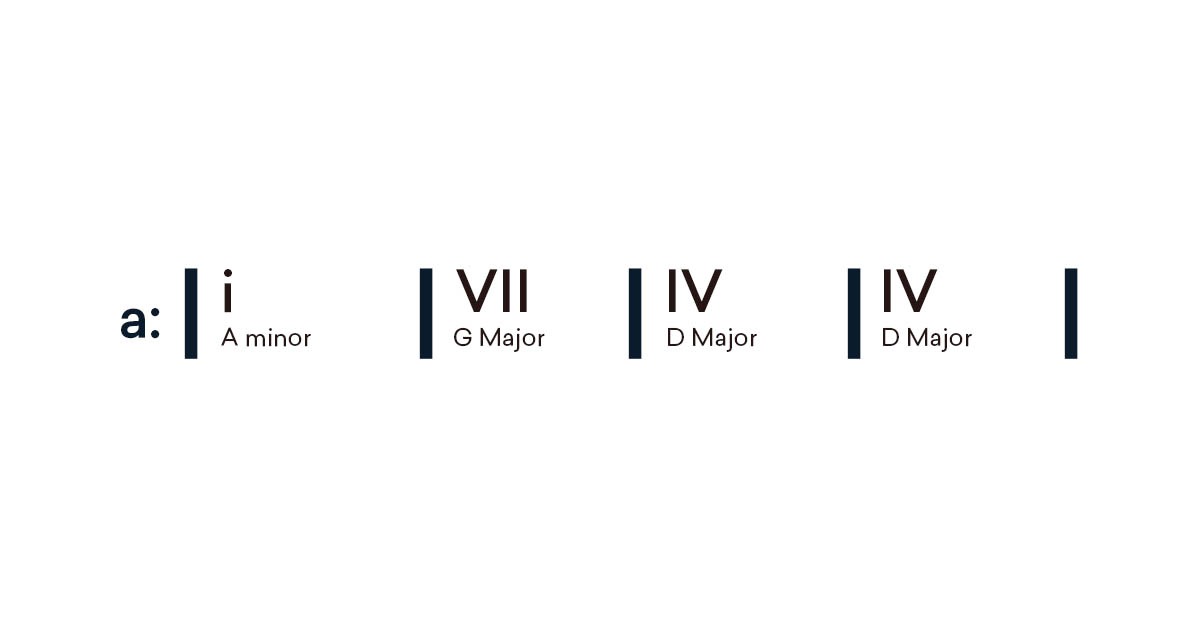
This chord progression appears in Chris Isaak's windswept land torch song Wicked Game.
The major IV chord is borrowed from the parallel major, providing an unexpected yet stable resting place for the moody harmonic sequence:
This side by side ane has been a staple chord progression in pop music over the past two decades.
By turning the V chord into a small-scale, it subtly surprises listeners to create an interesting mood:
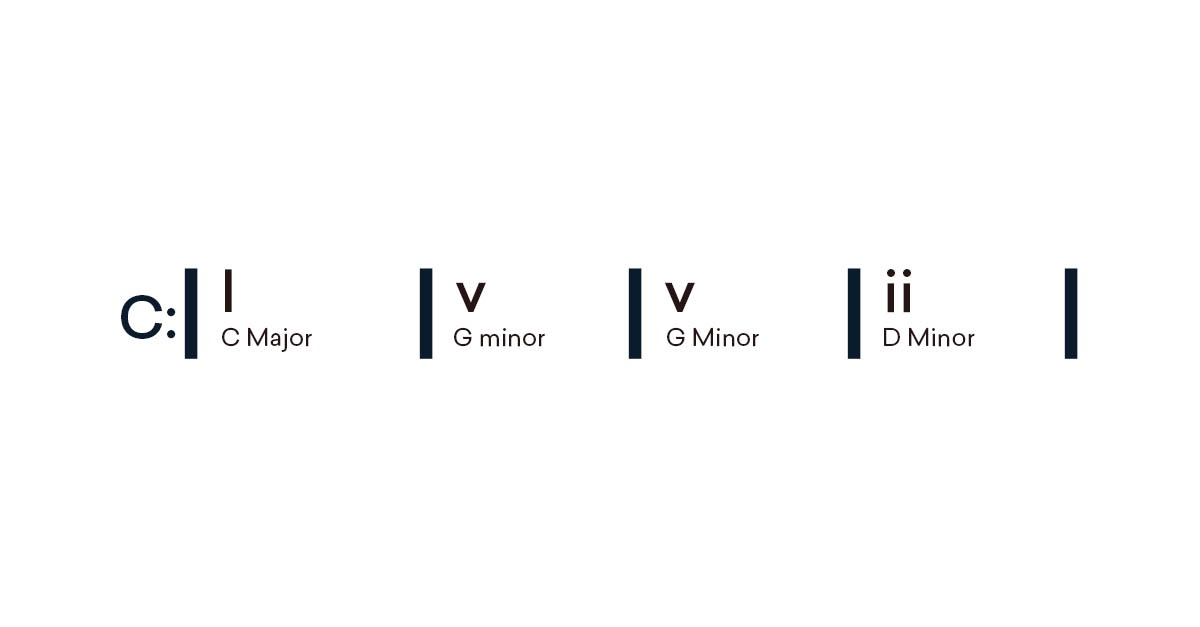
Coldplay uses this progression in multiple songs, including Clocks:
Some chord progressions are closely associated with specific genres.
The ii-5-I progression is the backbone of almost all of the standard tunes in jazz. But the ii-V-I shows upward in many unlike genres for it's smooth and nostalgic feel.
These days yous'll ofttimes here it in the jazz-influenced chord changes in lo-fi hip-hop.
Depending on how you use it, ii-V-I can sound sophisticated and cosmopolitan or cosy and comfy due to its naturally stiff ascendant-tonic relationship.
Here's how the ii-5-I is built:

And here's a runway that shows how it bully it tin sound in a modern tune:
Weird chord progressions
Every once in a while, it helps to build a vocal on a weird chord progression.
Borrowing chords from other keys is a nifty way to play on your listener'southward expectations and put them in a weird identify.
Borrowing chords from other keys is a great mode to play on your listener's expectations and put them in a weird place.
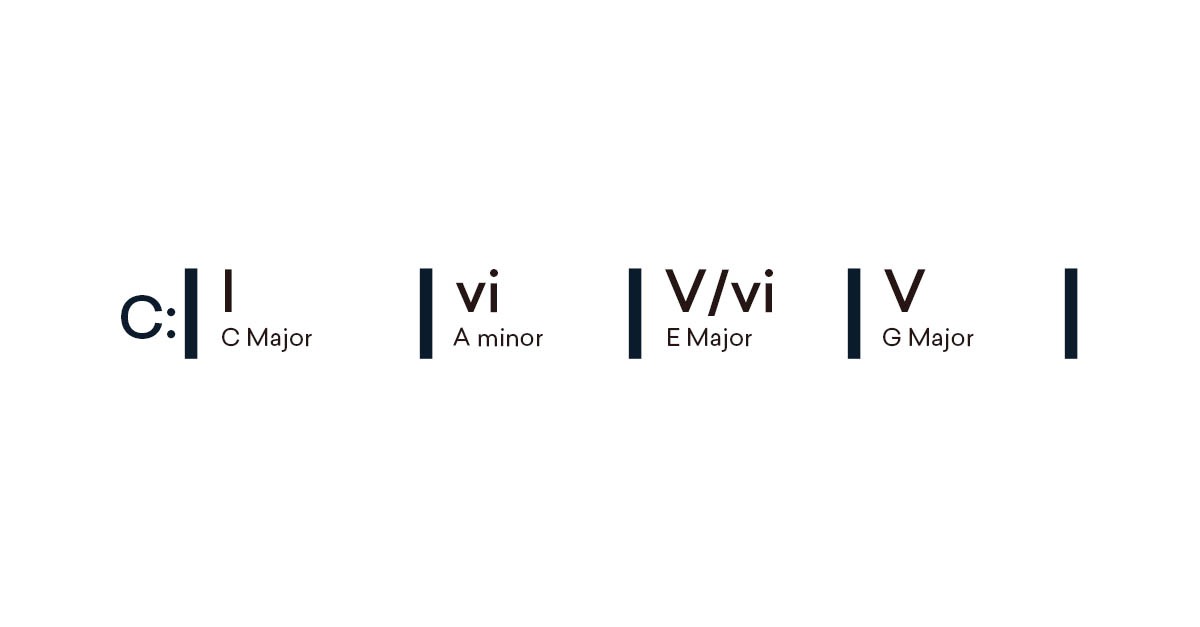
This progression uses an unexpected major chord to add some nice tension. The Arcade Fire utilize this progression for their song The Suburbs:
Happy chord progressions
Happy means something unlike to all of us. But in musical terms, anticipated progressions with major chords reflect contentment and happiness.
There's zip more than straightforward than a simple progression based on I, IV and V:
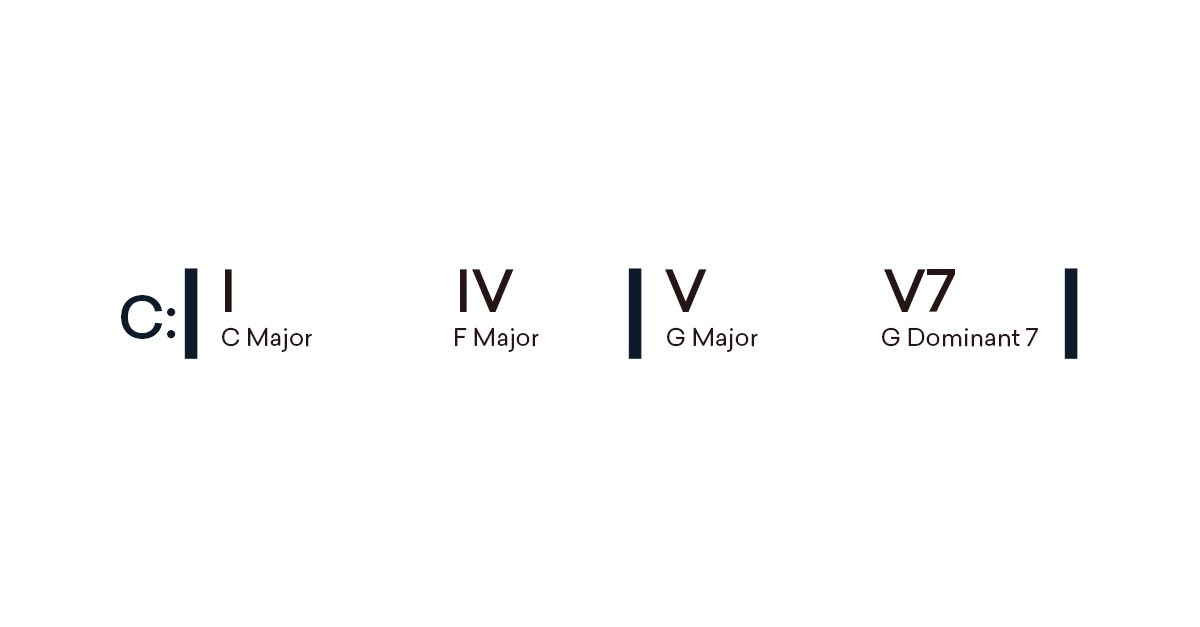
Only uncomplicated progressions similar this experience amazing when used well:
To make things more heady you lot can try a progression with a little more tension like this:
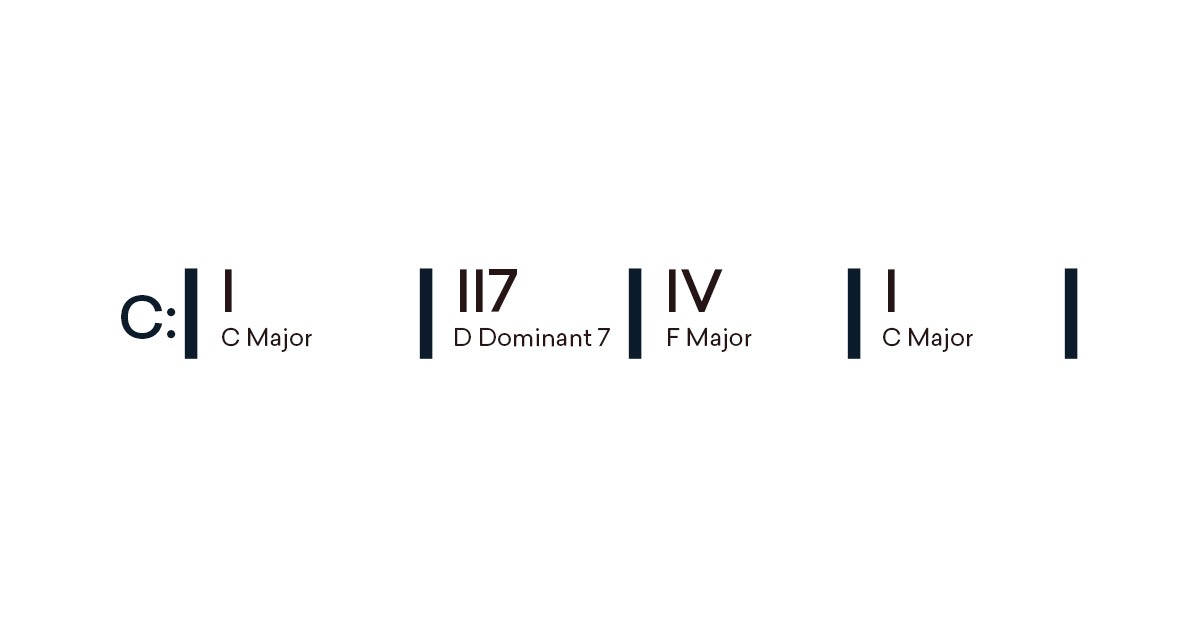
In this example II7 acts equally a predominant chord for a gospel manner cadency.
This extra tension produces an expectant sound that can experience similar giddy excitement that builds every bit the progression develops.
Some other progression that tin can sound unexpectedly happy is the 12-bar blues.
I know what you're thinking. Why is a dejection progression doing hither in the happy chord progression session?
This progression was born from the blues and is now featured in countless songs from many genres.
Instead of "happy" or "sad," this progression is a blank musical slate that'south easy to create with.
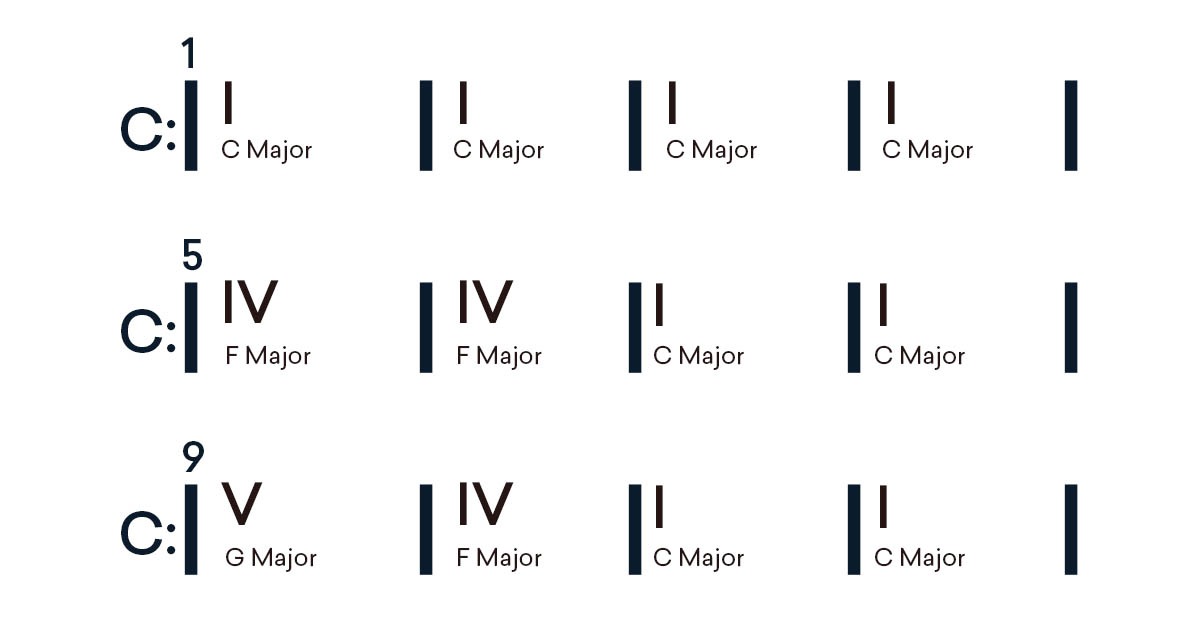
The poetry sections of The Beatles' Can't Buy Me Dear are great examples of the 12 Bar Dejection progression in activity:
Emotional intelligence
These emotional chord progression examples are a slap-up outset, but you'll need to nowadays them in a compelling way if you want to connect with listeners.
Instrumentation, music production, and storytelling go a long fashion in music.
In that location's no perfect formula for making emotionally impactful music, and so you'll need to experiment to run across what works for you lot!
Source: https://blog.landr.com/emotional-chord-progressions/
0 Response to "You Don T Know How It Feels Chords"
Post a Comment